By Amadeus M
Consistently ranked among the world’s most content nations, Norway pairs dramatic natural landscapes with deeply rooted history and modern Scandinavian design. From glacier-carved fjords to Arctic archipelagos and quietly confident cities, the country offers remarkable geographic and cultural range. These 14 destinations showcase the very best of it.
1. The Norwegian Fjords
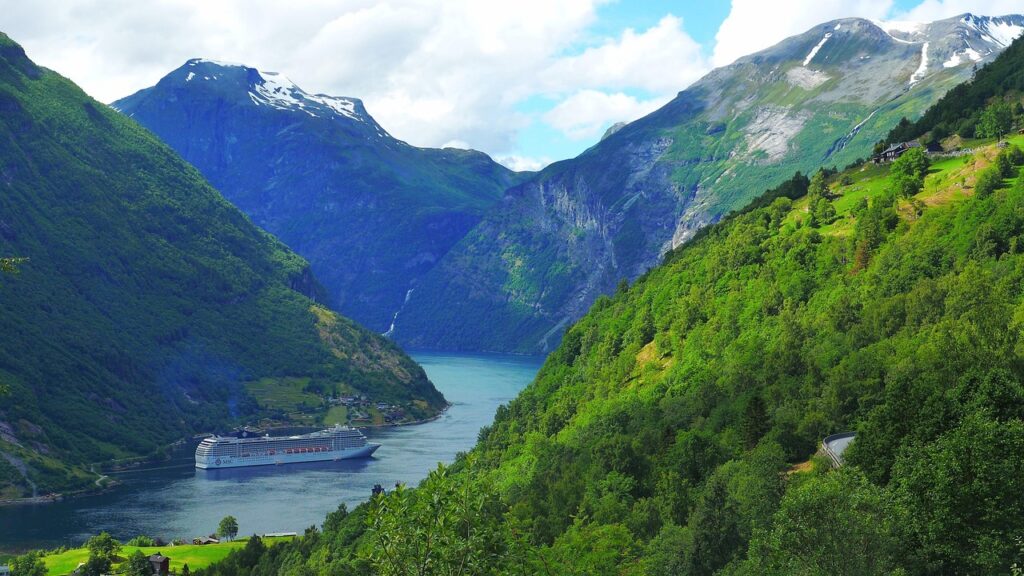
Western Norway’s fjords are immense geological corridors shaped by ancient ice. Vertical cliffs plunge into still, slate-blue water while waterfalls trace silver lines down steep rock faces. The scale of these landscapes is difficult to grasp until you are standing inside them.
- Cruising through Geirangerfjord, a UNESCO World Heritage Site.
- Hiking to Preikestolen, the famous flat cliff rising above Lysefjord.
- Kayaking along the narrow waters of Nærøyfjord.
2. Bergen
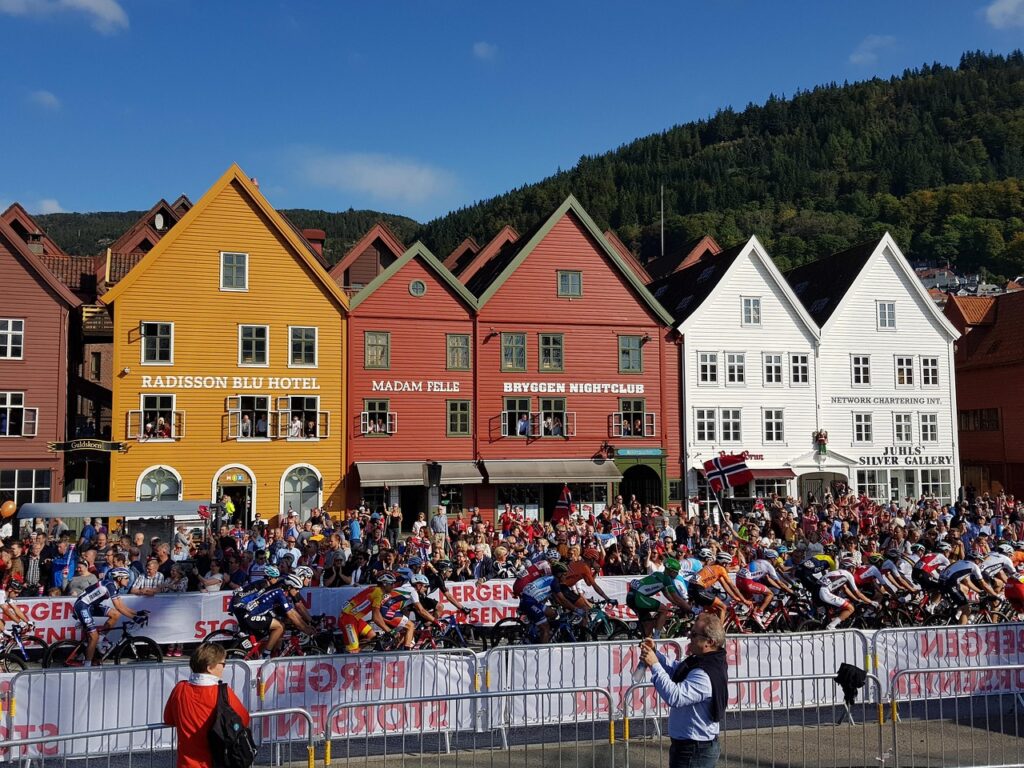
Surrounded by seven mountains and facing the North Sea, Bergen blends maritime history with creative energy. The wooden trading houses of Bryggen reflect its Hanseatic past, while cafés, galleries, and music venues give it a contemporary vitality that feels entirely its own.
- Riding the Fløibanen funicular up to Mount Fløyen for panoramic views over the city.
- Exploring Bryggen’s historic wharf, now a UNESCO World Heritage Site.
- Visiting Troldhaugen, the former home of composer Edvard Grieg.
3. Ålesund
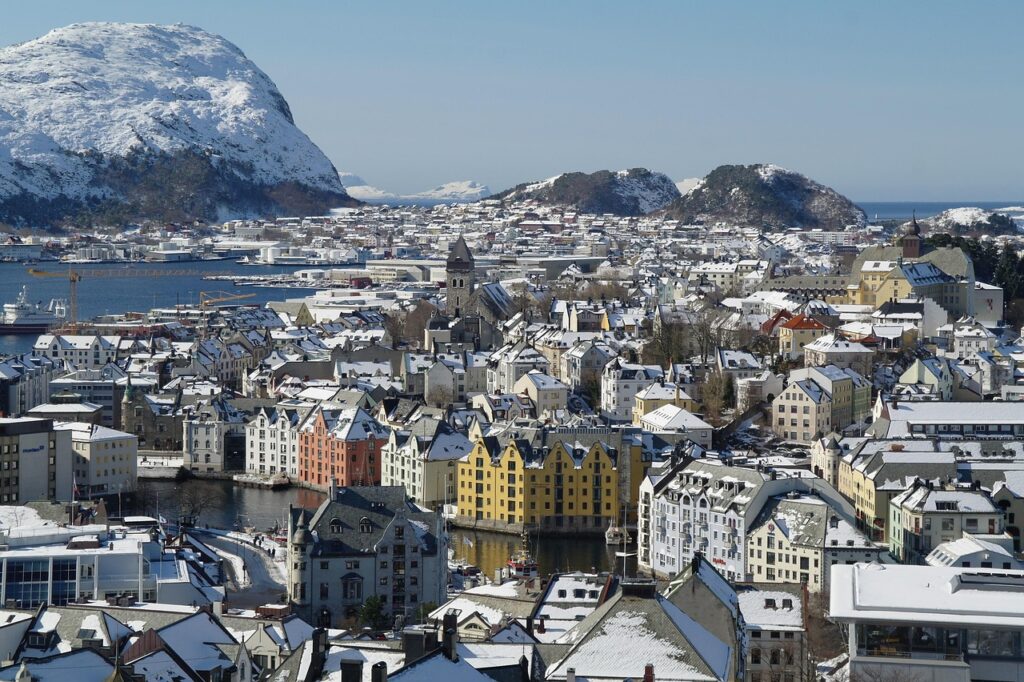
After a devastating fire in 1904, Ålesund was rebuilt in a coordinated Art Nouveau style. Turrets, ornate facades, and curved architectural details give the town a distinctive character rarely found elsewhere in Scandinavia. Its island setting, surrounded by fjords and open water, adds to the sense of arriving somewhere genuinely unlike anywhere else.
- Climbing to the Aksla viewpoint for sweeping views over the town and surrounding islands.
- Visiting the Art Nouveau Centre to understand the story behind the town’s architecture.
- Exploring the nearby fjords and coastal islands by boat.
4. Lofoten Islands
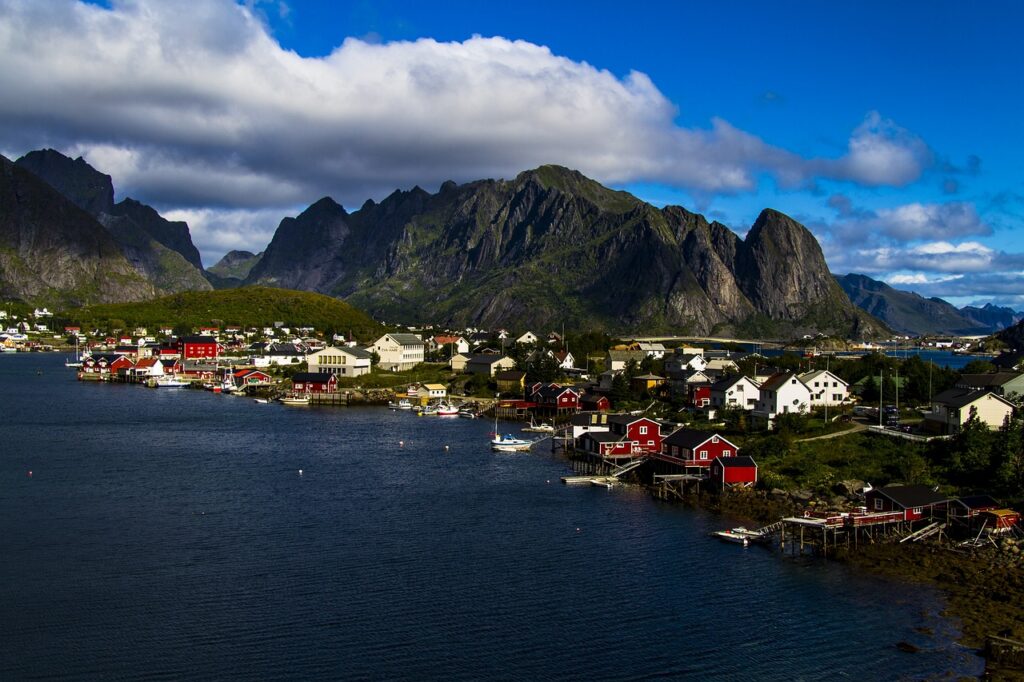
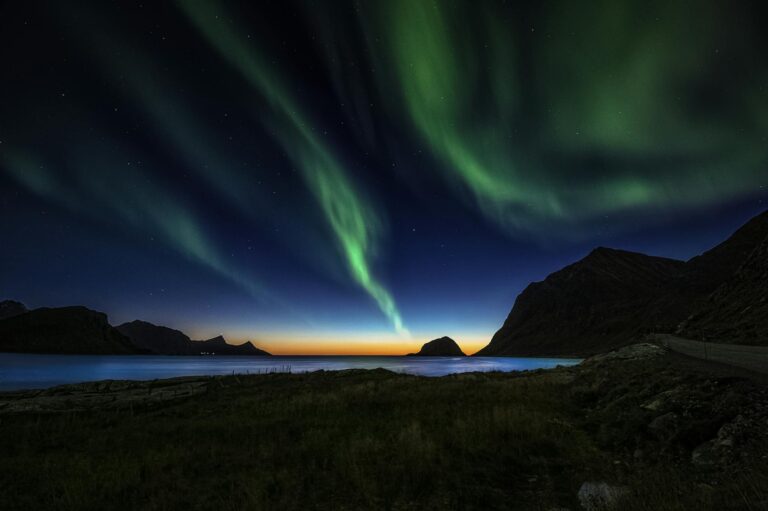
North of the Arctic Circle, jagged peaks rise directly from the sea. Fishing villages cling to the shoreline where traditional red rorbuer cabins contrast against granite mountains and the ever-shifting northern light. The Lofoten Islands feel like a place apart, remote and vivid in equal measure.
- Staying overnight in a traditional fisherman’s cabin right on the water.
- Visiting the village of Reine, widely considered one of Norway’s most beautiful communities.
- Watching the winter sky for the Northern Lights above the mountains.
5. Oslo
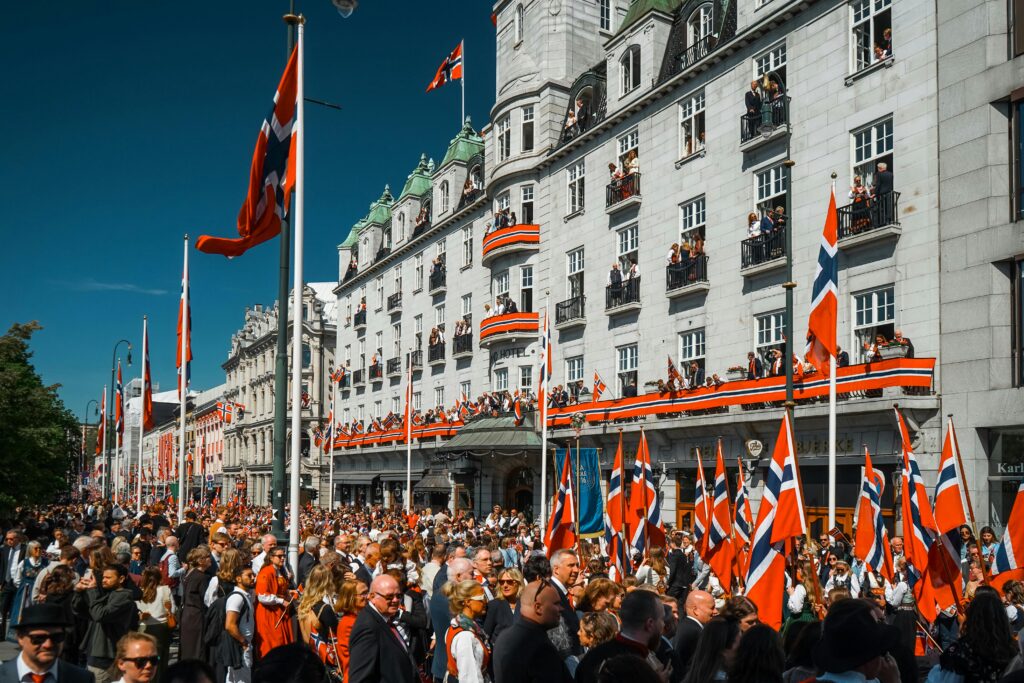
Set at the head of the Oslofjord and framed by forested hills, Norway’s capital balances innovation and heritage with ease. Bold modern architecture stands comfortably alongside Viking history and world-class museums. The revitalized waterfront has transformed the city’s relationship with the sea in recent decades.
- Walking across the roof of the Oslo Opera House for views over the fjord and city skyline.
- Viewing Edvard Munch’s iconic painting “The Scream” at the Munch Museum.
- Exploring the revitalized waterfront districts of Aker Brygge and Tjuvholmen.
6. Trolltunga
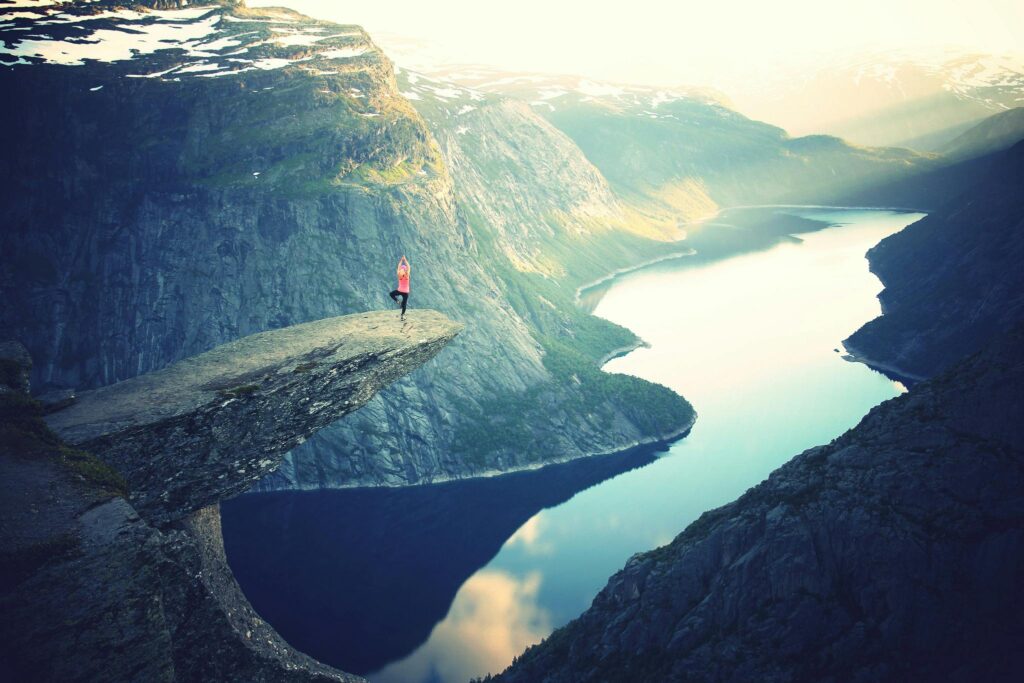
Projecting horizontally above Lake Ringedalsvatnet, Trolltunga offers one of Norway’s most dramatic viewpoints. The demanding round-trip hike of roughly 22 kilometres rewards persistence with sweeping views across high mountain terrain and the deep lake far below. Most visitors allow a full day for the experience.
7. Flåm
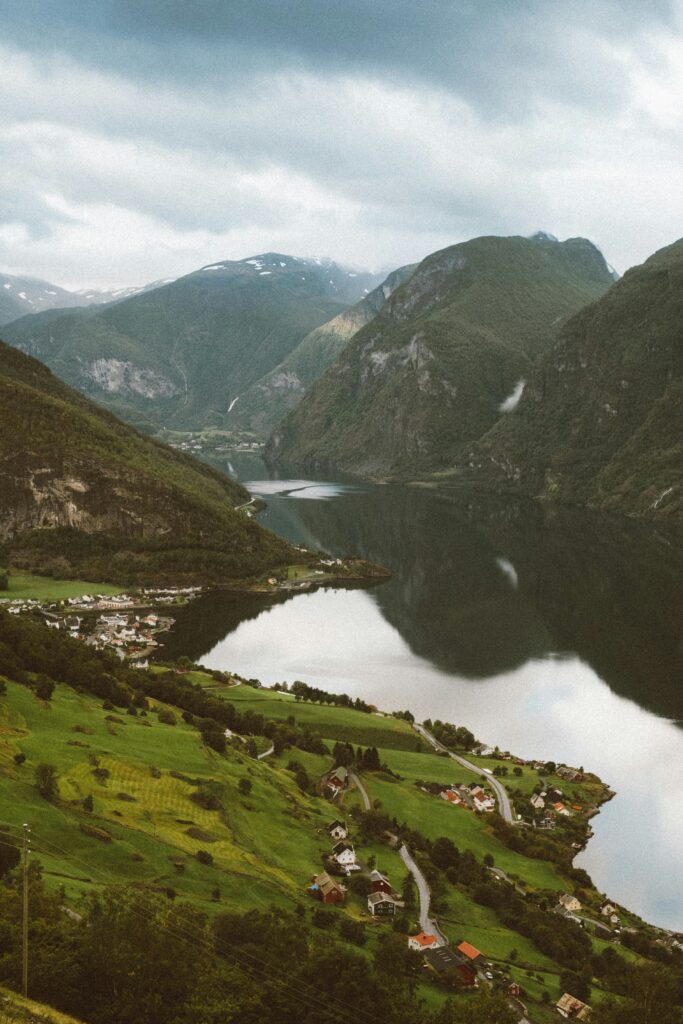
Positioned at the inner edge of Aurlandsfjord, Flåm is defined entirely by its setting. Steep mountains enclose the village on all sides, and the famed Flåmsbana railway climbs sharply through waterfalls and high mountain valleys on one of the most scenic rail journeys in the world. The village itself is small and unhurried, best enjoyed as a base for exploring the surrounding landscape.
8. Henningsvær
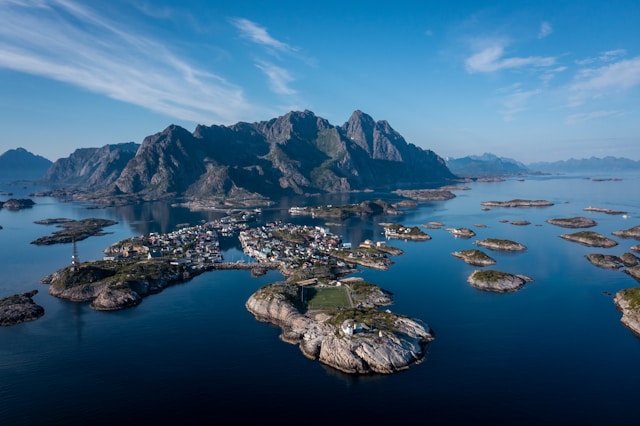
Spread across small islands in Lofoten, Henningsvær remains rooted in fishing traditions while quietly supporting a thriving arts community. The harbor remains central to daily life, and the contrast between working boats and gallery spaces gives the village an energy that feels both authentic and alive.
9. Reine
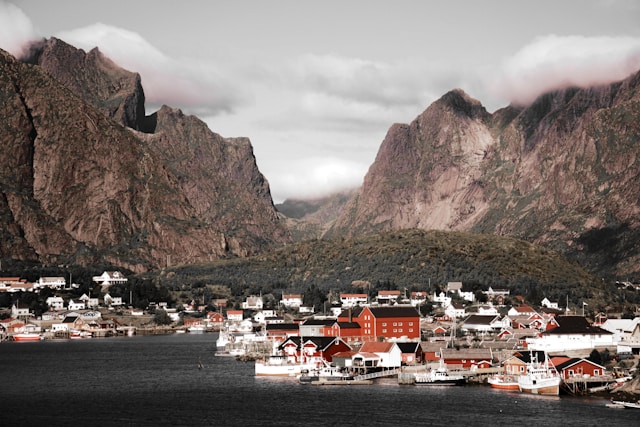
One of Norway’s most photographed coastal communities, Reine combines traditional red architecture with steep mountain backdrops and the calm, reflective waters of the surrounding fjord. It is a place that earns its reputation entirely on its own terms, where the landscape and the village feel perfectly matched to one another.
10. Stavanger
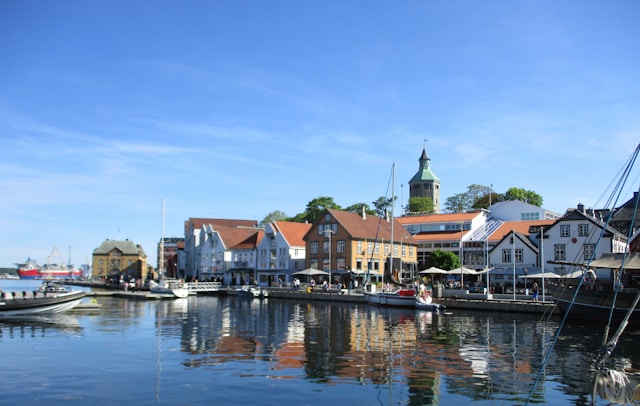
Stavanger pairs its beautifully preserved wooden neighborhoods with a strong contemporary identity shaped by centuries of maritime trade. The old and new sit comfortably side by side throughout the city, making it one of Norway’s most rewarding urban destinations.
- Walking through Gamle Stavanger, home to over 170 preserved white wooden houses.
- Hiking to Preikestolen, the famous flat-topped cliff rising 604 metres above Lysefjord.
- Relaxing at Solastranden, one of Norway’s finest sandy beaches.
11. Trondheim
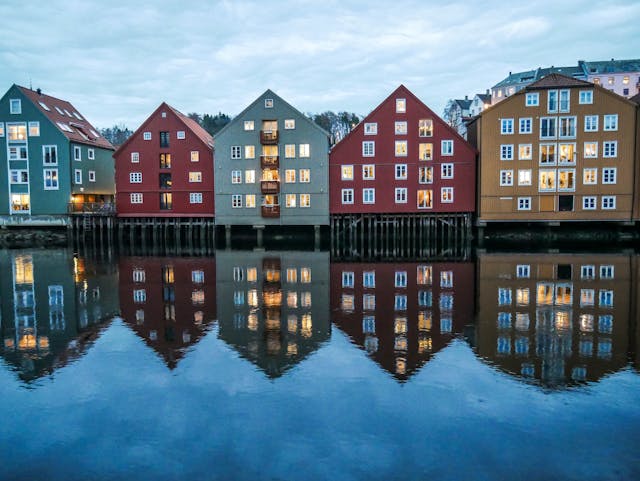
Founded in the Viking Age, Trondheim remains one of Norway’s most historically significant cities. The towering Nidaros Cathedral dominates the skyline, while colorful warehouses line the Nidelva River. The city’s large student population gives it an unusually lively and youthful atmosphere for a place of such deep historical weight.
12. Skudeneshavn
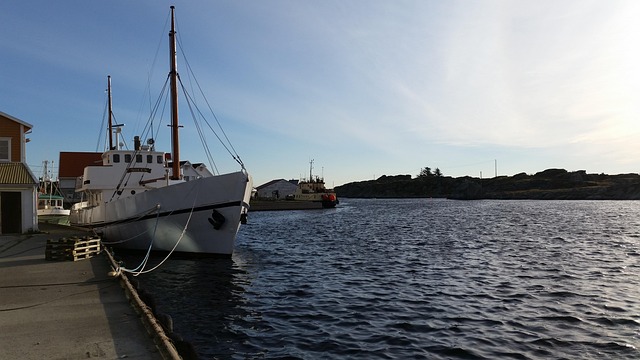
On the southern tip of Karmøy Island, Skudeneshavn preserves more than 130 white wooden houses dating back to the 1800s. The town has maintained its maritime identity with remarkable care, and walking its narrow streets feels like stepping into a different century. It remains one of Norway’s lesser-known but most rewarding coastal towns.
13. Fredrikstad
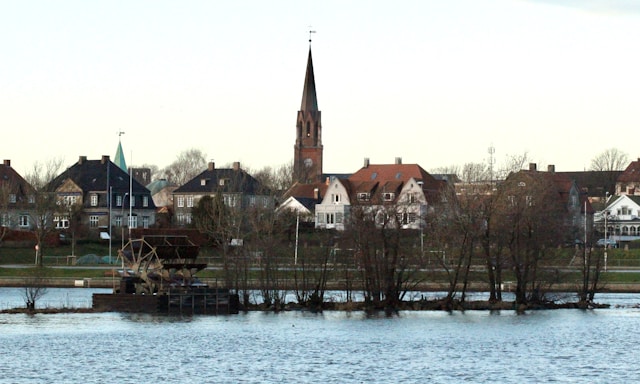
Fredrikstad’s fortified Old Town, known as Gamlebyen, is one of Northern Europe’s best-preserved star-shaped fortresses. Cobblestone streets, defensive ramparts, and centuries-old buildings reflect a history shaped by conflict and strategic importance. Today the old town is home to artists, independent shops, and outdoor cafés that bring new life to its ancient walls.
14. Jotunheimen National Park
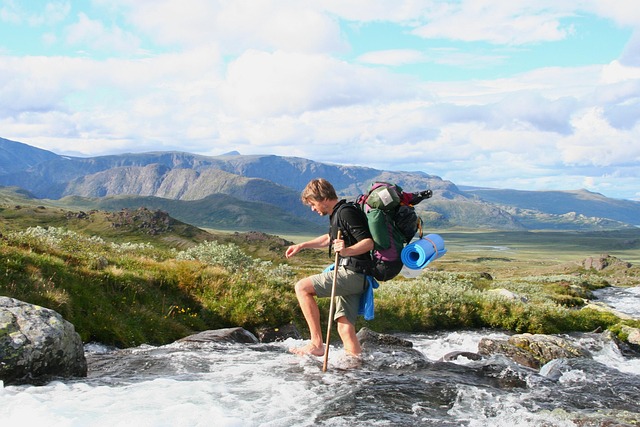
Translating as Home of the Giants, Jotunheimen National Park contains Norway’s highest peaks, including Galdhøpiggen at 2,469 metres. The landscape is defined by alpine plateaus, glacial valleys, and intensely blue mountain lakes. It is Norway’s most celebrated hiking destination and rewards visitors at every level of experience.
- Hiking the Besseggen Ridge, one of the most famous mountain walks in Scandinavia.
- Climbing Galdhøpiggen, the highest peak in Norway and all of Northern Europe.
- Watching for reindeer and golden eagles across the open alpine plateau.
Norway’s appeal lies not in exaggeration but in scale and contrast. Compact cities sit beside vast wilderness, deep history exists alongside progressive design, and Arctic light balances quietly with dense forests. Whether you are exploring fjords, coastal villages, or alpine national parks, each of these destinations reveals a different and equally compelling dimension of this remarkable northern country.