The majority of the Norwegian population also had their origins in the Viking Age
Although the Vikings lived long ago, their powerful legacy endures, and there is no shortage of interest in their history and traditions. There are many ways for interested travelers to experience Viking life and traditions in modern Norway. For history enthusiasts and families with children, a trip to Norway is a fantastic way to explore Viking history – across the country you will find museums, tours, Viking villages, and more just waiting to be discovered.
Ancient Viking swords displayed in a museum, focus on intricate handles, gold details, and preserved blades in glass cases.
Where did Vikings come from?
The origin of the Vikings was in the Nordic countries. Their homeland was what we now know as Scandinavia, but the countries of Norway, Sweden, and Denmark did not come into existence until the end of the Viking Age.
Evidence of Viking settlements has been found throughout the Nordic countries. Although the Norwegian, Swedish, and Danish Vikings were separate groups living in different areas, they all shared certain common traits and occasionally formed alliances with each other. These Scandinavian seafarers traveled far and wide on their characteristic Viking ships, raiding villages, trading goods, and much more.
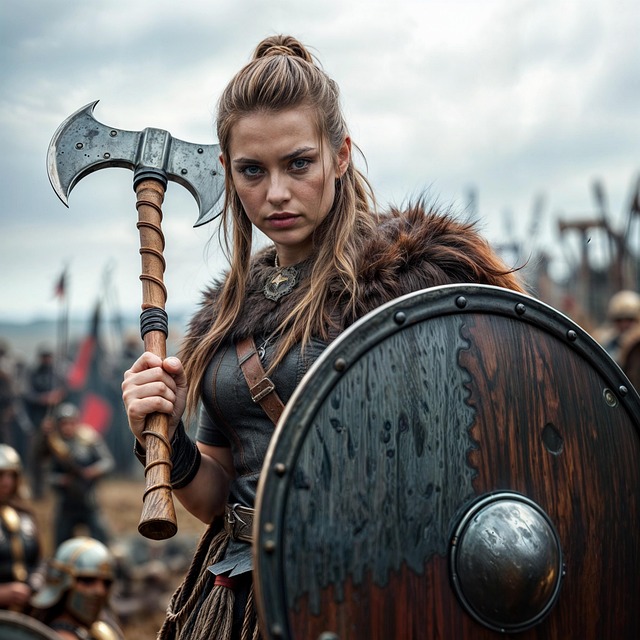
Good Viking combat gear was important when fighting enemies
Why Northern Europe lived in fear of the Vikings
It is true that people in Northern Europe lived in fear of the Vikings, as they often raided coastal settlements for food and valuable items, while also taking slaves in the process. Moreover, even monasteries were subject to these raids, which truly underscores the brutality of the medieval period.
At the same time, we must also remember that the Middle Ages were a brutal time in general. In other words, tribes from all over Europe also plundered settlements and held agrarian lands in the south, taking slaves. In fact, this is exactly how the Chinese Empire was established, with many iconic warlords fighting over the same land.
As if that were not enough, the fall of the Roman Empire led to great migrations, while the collapse of agriculture in the north caused masses to move to what is now Britain. For this reason, warlords were in constant competition and were now confined to fighting over much smaller regions.
You might wonder why you need to know this? Because it serves as a reminder that the Vikings were ruthless, but this was also a violent period.
Vikings in battle at the Viking village in Gudvangen
What is the history of the Vikings in Norway?
For many people around the world, Norway is the land of the Vikings, and the Vikings have a long and interesting history in Norway.
Vikings are generally portrayed in history and popular culture as brutal warriors who destroy everything in their path, burning villages, looting, and killing – and there is ample evidence for this interpretation of the Vikings. However, the truth may be more nuanced, as there is also evidence that the Vikings traveled with the intention of friendly trade and exchange with other peoples.
Norwegian Vikings were known to be excellent boat builders and seafarers. The Vikings traveled around the world, and they would not have been able to reach distant shores if not for their fantastic craftsmanship and ingenuity when it came to their Viking ships.
There is no doubt that seafaring Vikings were pioneers, tough, and adventurous – they sailed to distant lands without knowledge of what awaited them on foreign shores. At home in Norway and the other Scandinavian countries, Viking societies were generally peaceful, with the main focus on farm work, fishing, and boat building.
Viking warrior in armor on wet crosswalk, holding battle axe, with snow covered mountains and dramatic sky in the background.
Do Vikings still exist?
Although the Vikings no longer exist, Viking culture, history, and tradition are alive, and there are many opportunities to explore Norway’s strong Viking past today. Viking traditions are brought to life in dedicated Viking villages scattered around Norway, and there are also a number of fantastic museums focusing on Viking history.
The history of the Norwegian Vikings is interesting for both locals and travelers. If you spend time in the capital, the Viking Ship Museum in Oslo is a wonderful place to start. Here, visitors can see the world’s best preserved Viking ships, such as the Oseberg, Gokstad, and Tune longships. If you are in northern Norway, the Lofotr Viking Museum in the beautiful Lofoten Islands gives visitors the chance to check out the world’s largest Viking Age longhouse and gain valuable insight into how the Vikings lived.
You can still find modern Vikings in the fascinating and unique living Viking villages scattered around Norway. Here, children and adults of all ages can get a taste of real Viking life. The lively Njardarheimr Viking Village in Gudvangen by the picturesque Nærøyfjord is one of the most popular Viking attractions in Norway and you can visit this unique place on our legendary Norway in a Nutshell tour.
Another great opportunity for those wishing to connect with their inner Viking is to visit the famous Viking Farm at Avaldsnes on the island of Karmøy in Rogaland. This popular Viking Age settlement offers plenty of insight into Viking history and tradition, with guided tours, a history center, and fun activities for children and adults